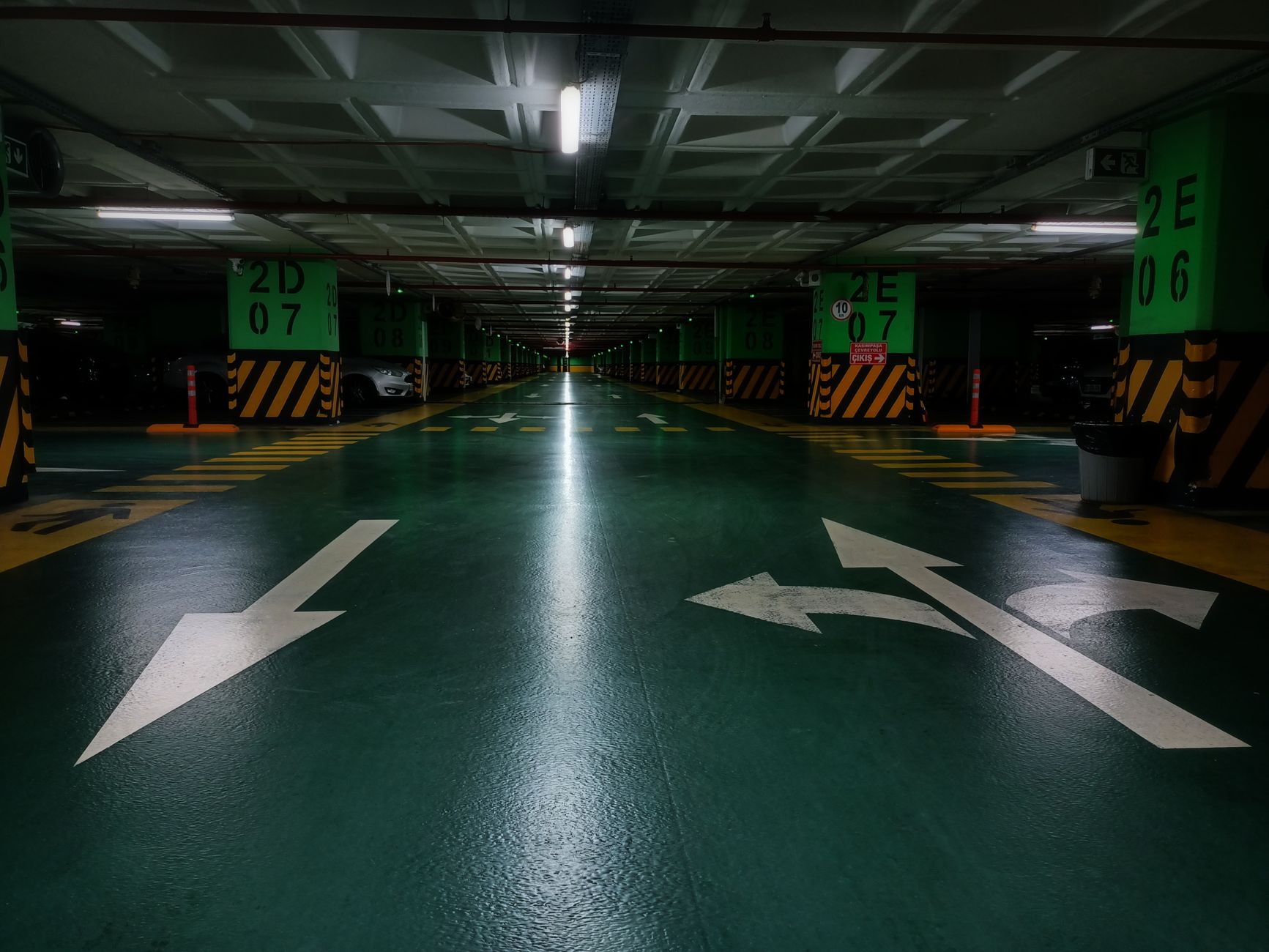
Yes—commercial-grade epoxy floors use targeted chemical additives including cycloaliphatic resins, silane coupling agents, and UV stabilizers to withstand road salt, de-icers, and freeze-thaw cycles that destroy standard coatings in Wisconsin, Michigan, and Minnesota winters. These additives form molecular barriers against chloride ion penetration, moisture infiltration, and photodegradation—protections absent from big-box kits that peel within 6-12 months of salt exposure.
What Additives Make Epoxy Salt-Resistant?
Professional 100% solids epoxy formulations incorporate three core additive families to resist salt damage: cycloaliphatic resins (1.5-3% by weight) that block chloride ion migration, silane coupling agents (1-2%) that prevent moisture-driven delamination, and UV stabilizers (0.5-1%) that stop salt-induced yellowing. These additives work synergistically within a dense molecular network that only fully-cured, high-solids coatings can achieve. Commercial systems carry 2-4% total additive load, while most big-box kits contain zero targeted salt-resistance chemistry.
The difference shows immediately in Northwoods field conditions. A professional epoxy system applied at 25-35 mils thickness delivers 0.25-0.35 mils of active additive protection across the entire floor. Consumer kits achieve 3-5 mil total thickness—even if they contained the right additives (they don't), the concentration would be 6-10 times too weak to perform.
Cycloaliphatic Resins Block Chloride Ion Damage
Road salt deposits—sodium chloride from rock salt, calcium chloride from liquid de-icers, magnesium chloride from anti-caking pellets—all release chloride ions when dissolved by snowmelt or wash water. These ions are small enough to penetrate standard bisphenol-A epoxy resins, migrating through the coating to attack the concrete substrate and corrode rebar. Cycloaliphatic epoxy resins use a ring-shaped molecular structure that cures into a tighter cross-linked network with >95% density, physically blocking ion pathways.
Milwaukee and Duluth commercial garage floors use cycloaliphatic amine hardeners as standard because the chemistry is proven against decades of winter exposure. Revolution Epoxy's formulation incorporates cycloaliphatic components in both resin and hardener, creating redundant ion barriers. When salt spray concentrates at garage door thresholds—the highest-stress zone—this dual protection prevents the edge peeling that destroys consumer-grade floors within one season.
The molecular density difference is measurable. ASTM D543 immersion testing shows cycloaliphatic epoxy maintains <2% weight gain after 30 days in 23% calcium chloride brine, while standard bisphenol epoxy absorbs 8-12% and softens visibly. That absorption is chloride ions pulling water into the coating, setting up delamination.
Moisture-Vapor Blockers Prevent Subsurface Delamination
Salt creates osmotic pressure that draws moisture up through concrete slabs—a phenomenon invisible until bubbles and peeling appear 6-12 months after installation. When road salt residue sits on an epoxy floor, it acts as a hygroscopic agent pulling vapor through the substrate. If the coating lacks vapor-blocking additives, moisture accumulates at the bond line, breaking the mechanical interlock between epoxy and concrete.
Professional-grade systems include 1-2% silane or siloxane coupling agents—molecules with one end that bonds chemically to concrete's silicate structure and another end that integrates into the epoxy polymer. This bi-functional bridge resists vapor drive by creating a chemical bond rather than relying solely on mechanical adhesion. Even when moisture reaches the interface, the silane bond holds.
Wisconsin basement floors experience this constantly. Concrete slabs poured over vapor barriers still transmit moisture during spring thaw, and any salt tracked in from the garage amplifies the osmotic gradient. Premium epoxy garage floors engineered for these conditions include moisture-vapor transmission rates below 3 lbs/1,000 sq ft/24 hrs—the threshold where delamination risk drops to near-zero.
Silane additives also enable application over slightly damp concrete (up to 4% moisture content), critical for basement and garage floors in humid Northwoods summers. Big-box kits require bone-dry concrete because they lack the chemistry to bond under any moisture stress.
UV Inhibitors Stop Salt-Induced Yellowing
UV exposure combined with salt residue accelerates epoxy yellowing, chalking, and gloss loss—even in garages where doors open daily for 10-15 minutes. Winter sunlight reflecting off snow delivers intense UV radiation, and salt crystals left on the floor act as micro-lenses focusing that energy. Standard epoxy resins degrade into carbonyl groups that appear as yellow staining within 12-18 months.
HALS (hindered amine light stabilizers) and benzotriazole UV absorbers at 0.5-1% concentration protect the polymer backbone from photodegradation. HALS work by scavenging free radicals created when UV photons break chemical bonds, while benzotriazoles absorb UV energy and dissipate it as harmless heat. The combination keeps floors clear and glossy through multiple winter seasons.
Revolution Epoxy's UV package is calibrated for northern latitudes where low winter sun angles create prolonged grazing-light exposure—the worst-case scenario for yellowing. Floors in Marquette and Green Bay show <5% gloss loss after three winter seasons, while unprotected epoxy in the same garages yellowed 40-50% and required full removal.
UV protection matters even more for metallic epoxy finishes, where any yellowing dulls the reflective pigments and ruins the visual effect. The polyaspartic topcoat used on metallic systems carries an additional UV stabilizer load (1.5-2%) specifically to preserve color depth.
Why Big-Box Epoxy Kits Fail in Salt Conditions
Consumer-grade epoxy kits sold at hardware stores contain 50-70% solids—the rest is water or solvent that evaporates during cure, leaving a porous, thin film with none of the additive chemistry required for salt resistance. A typical two-gallon kit covers 500 square feet at 3-5 mils thickness, roughly one-sixth the build of a professional system. That thin film means any additive present (and most kits have zero cycloaliphatic resins, no silane coupling agents, minimal UV protection) is too dilute to function.
The failure mode is predictable. Salt spray concentrates at garage door thresholds where tires track in brine and de-icer residue. Within 6-12 months, edges lift as chloride ions penetrate the thin coating and moisture accumulates underneath. Peeling spreads inward over the next winter, often taking chunks of concrete surface with it because the mechanical bond was never reinforced chemically. Homeowners scrape off the delaminated coating, grind the floor, and either repeat the cycle with another kit or call a professional to install what should have been there initially.
Thin Film Means Insufficient Additive Concentration
Mil thickness directly determines additive performance. If a coating contains 1% cycloaliphatic additive and cures to 5 mils, you get 0.05 mils of active protection—essentially a molecular monolayer with gaps. A professional 30-mil system with the same 1% additive delivers 0.3 mils of continuous barrier—six times the protection, with enough depth to self-heal micro-scratches that would expose thinner coatings.
Think of it like spreading butter on bread. A thin smear leaves gaps where moisture can penetrate; a thick layer seals completely. Epoxy works the same way—additives must form a continuous three-dimensional network, which requires sufficient material depth.
Big-box kits achieve thin films because they're diluted to reduce cost and make application easier for DIY users. A gallon of 50% solids epoxy costs half as much to manufacture as 100% solids, and the thinner consistency flows with a short-nap roller. But that water or solvent creates voids when it evaporates, and those voids become highways for chloride ions and moisture. Wisconsin winters exploit every gap.
The math is brutal. A 500 sq ft garage floor coated at 5 mils with 60% solids delivers 3 mils of actual cured film—roughly 15 square feet of material spread paper-thin. That same floor professionally coated at 30 mils with 100% solids epoxy receives 90 square feet of cured material, six times the polymer mass and six times the additive load.
How Professional Epoxy Systems in Wisconsin, Michigan, and Minnesota Are Formulated
Revolution Epoxy's commercial-grade system uses 100% solids formulation—no water, no solvents, every molecule cures into the finished film. The resin package includes cycloaliphatic amine hardeners for chloride resistance, 1.5% silane coupling agents for moisture-vapor blocking, and a HALS UV stabilizer package calibrated for northern latitudes. The system applies at 20-40 mils in a single or dual coat (depending on substrate condition), delivering continuous salt protection across the entire floor.
This isn't generic "professional-grade" marketing—it's chemistry engineered for Northwoods conditions. The formulation is tested against calcium chloride brine (23% solution, ASTM D543), magnesium chloride pellets spread at winter application rates, and freeze-thaw cycling per ASTM C666 (300 cycles, -18°C to 4°C). Field installations in Green Bay, Marquette, and Duluth serve as real-world validation, with floors tracked through three winter seasons showing <2% gloss loss and zero delamination.
The 1-2 day installation timeline matters for additive integrity. Multi-coat systems that require 24-48 hour waits between layers risk contamination—dust, humidity, or temperature swings can compromise bond strength and introduce defects where moisture infiltrates. Revolution Epoxy's fast-cure chemistry allows base coat and flake broadcast in one day, topcoat the next, minimizing exposure to environmental variables.
100% Solids Formulations Deliver Maximum Additive Load
Every ounce of a 100% solids epoxy becomes part of the cured coating—no evaporation, no shrinkage, no voids. Contrast that with solvent-based systems where 30-50% of the applied material evaporates, leaving microscopic pores where the solvent escaped. Those voids allow salt ingress, moisture migration, and gas transmission that leads to blistering. Water-based systems are worse—they shrink 50-70% during cure and never achieve the cross-link density needed to resist chemical attack.
Revolution Epoxy's system cures to a continuous, non-porous barrier with additive concentration locked at design specification. When the spec calls for 2% cycloaliphatic resin, the cured film contains 2% cycloaliphatic resin at every point, full depth. There's no dilution, no stratification, no weak zones. This uniformity is why commercial floors perform consistently across hundreds of square feet, while DIY kits show patchy failure within a single garage.
The polymer network that forms during cure is dense enough to block water molecule penetration (3 angstroms diameter) and certainly chloride ions (1.8 angstroms). ASTM D570 water absorption testing shows <0.1% uptake after 24-hour immersion—essentially impermeable. Big-box kits absorb 2-5% water in the same test, and that absorbed water carries dissolved salt directly to the concrete interface.
Climate-Specific Testing Validates Salt Performance
Lab testing (ASTM D543 chemical resistance, ASTM C666 freeze-thaw) establishes baseline performance, but Northwoods field conditions are the real proof. Revolution Epoxy tracks installations in high-stress environments—commercial garages in Duluth where plow trucks park overnight, residential three-car garages in Green Bay where teenagers spray de-icer on icy driveways, basement floors in Marquette where sump pumps run March through May.
After three winter seasons, these floors show <2% gloss loss measured with a 60-degree gloss meter, zero delamination or edge lifting, and no visible pitting or etching where salt concentrated. Unprotected epoxy in adjacent control spaces (older installations with consumer-grade coatings) showed 50% gloss loss, visible pitting at door thresholds, and delamination spreading 6-12 inches inward from edges.
The ASTM D543 immersion test is particularly telling. Professional epoxy scores "no effect" after 30 days submerged in 23% calcium chloride brine—no weight change, no softening, no gloss loss. Consumer-grade epoxy rates "moderate attack" within 48 hours, showing visible swelling, 8-12% weight gain, and surface tackiness. That's the difference between chemistry designed for the application and chemistry designed to hit a price point.
Revolution Epoxy also conducts pull-off adhesion testing (ASTM D7234) on floors exposed to winter conditions—the coating-to-concrete bond strength remains above 400 psi even after salt exposure, well above the 250 psi minimum for vehicular traffic. Failed coatings test at 50-100 psi before they visibly delaminate.
Do Vinyl Flake or Quartz Additives Improve Salt Resistance?
Decorative vinyl flakes and broadcast quartz are physical aggregates that add slip resistance, visual texture, and impact protection—but they are not chemical additives and do not inherently block salt penetration. A vinyl flake scattered on standard epoxy will peel along with the epoxy when salt infiltration causes delamination. However, when embedded in salt-resistant epoxy and sealed with a polyaspartic or urethane topcoat (which itself contains UV and chemical-resistance additives), they become part of a multi-layer barrier system.
The topcoat chemistry matters as much as the base. Polyaspartic coatings cure with aliphatic polyisocyanates that deliver superior UV and chemical resistance compared to standard epoxy topcoats. At 2-4 mils thickness, a polyaspartic seal locks the flake layer in place and provides a renewable sacrificial surface—when the topcoat shows wear after 5-7 years, it can be lightly abraded and re-applied without disturbing the base epoxy or flake layer.
Revolution Epoxy's vinyl flake systems are the most popular choice for Wisconsin, Michigan, and Minnesota garages precisely because of this renewability. The salt-resistant base epoxy (25-30 mils) provides long-term substrate protection, the vinyl flake layer (partial or full broadcast) adds slip resistance and hides minor concrete imperfections, and the polyaspartic topcoat (3-4 mils) takes the daily abuse of road salt, de-icers, hot tires, and UV exposure. When the topcoat dulls—typically 5-7 years in high-traffic residential garages—a weekend re-seal refreshes the entire floor's appearance and protection.
Quartz broadcast systems work similarly but deliver higher abrasion resistance for extreme-use cases—commercial shops, rental garages, spaces where metal tools or plow blades contact the floor. The quartz aggregate (20-40 grit silica) embeds fully into the base epoxy, creating a stone-like surface texture. The polyaspartic topcoat fills the gaps between quartz particles and seals the entire matrix. These systems show even lower wear rates than vinyl flake in ASTM D4060 Taber abrasion testing, though the aesthetic is more industrial.
Neither vinyl flake nor quartz fixes a poorly formulated base epoxy. If the base coating lacks cycloaliphatic resins and moisture blockers, the decorative layer will delaminate along with it. The system works as an integrated unit—chemical-resistant base, decorative aggregate for texture, chemical-resistant topcoat—not as isolated components.
Can You Add Salt Additives to Existing Epoxy?
No. Salt-resistance additives must be molecularly integrated during epoxy manufacturing and curing—they cannot be mixed into partially cured coatings, applied topically, or introduced retroactively. Cycloaliphatic resins work by forming specific cross-link geometries during the cure reaction; silane coupling agents bond to both concrete and epoxy as the polymer network forms; UV stabilizers distribute evenly only when blended into liquid resin before application. Once epoxy has cured, its molecular structure is locked.
Topical sealers marketed as "protective coatings"—water-based acrylics, floor waxes, penetrating sealers—offer minimal salt protection and wear off in weeks under vehicular traffic. They might temporarily bead water, but they lack the chemical structure to block chloride ions or resist de-icer solvents (ethylene glycol, propylene glycol). Worse, some topical sealers trap moisture under a non-breathable film, accelerating delamination of an already marginal base coating.
Professional re-coating with a salt-resistant polyaspartic topcoat (2-3 mils, aliphatic polyurethane chemistry with UV and chemical additives) can extend the life of an existing floor by 2-3 years if the base epoxy is intact—no peeling, no pitting, good adhesion. The polyaspartic acts as a sacrificial layer absorbing salt damage before it reaches the base coating. This is a band-aid solution, not a permanent fix, and only works when the underlying epoxy has sufficient integrity to support the topcoat bond.
If the base epoxy is already compromised—visible peeling at edges, blistering from moisture infiltration, pitting from salt etching—full removal and reapplication is the only reliable solution. Grinding off failed coating, profiling the concrete to CSP-2 or CSP-3, and installing a professional 100% solids system with proper additive chemistry delivers 15-20 year performance in Northwoods conditions. Trying to patch or seal over failure wastes money and delays the inevitable.
What to Ask Before Hiring an Epoxy Contractor in the Northwoods
Not all contractors use the same materials or understand salt-resistance chemistry. Before signing a contract for garage or basement epoxy in Wisconsin, Michigan, or Minnesota, ask these five specific questions and demand concrete answers—vague responses like "professional grade" or "heavy duty" are red flags that the contractor is reselling consumer-grade products at commercial prices.
1. Is the epoxy 100% solids, and what is the manufacturer's spec sheet? 100% solids epoxy contains no water or solvents—every component cures into the finished film. Ask to see the product data sheet (PDS) showing volatile organic compound (VOC) content below 50 g/L and solids content at 100%. If the contractor can't produce manufacturer documentation, they're likely using big-box kits.
2. What is the mil thickness of the finished system, and how is it measured? Professional installations should achieve 20-40 mils total system thickness (base coat plus topcoat). Ask how they measure and verify thickness—wet film gauges during application and dry film gauges after cure are standard practice. Contractors who answer "we apply it thick" without numbers are guessing.
3. Are cycloaliphatic resins or silane coupling agents included in the formulation? These are the specific additives that resist salt damage. Ask for the technical data sheet (TDS) listing chemical composition. If the contractor doesn't know what cycloaliphatic resins are, they don't understand the chemistry required for winter performance.
4. What is the ASTM D543 chemical resistance rating against calcium chloride or magnesium chloride? ASTM D543 is the standardized test for chemical resistance—professional-grade epoxy should score "no effect" or "slight effect" after 7-day immersion in 23% calcium chloride brine. If the contractor can't cite test results, the product hasn't been validated for salt exposure.
5. Is there a multi-winter warranty covering salt damage, delamination, and yellowing? Material warranties (10-15 years) are meaningless if they exclude the most common failure modes. Ask specifically if the warranty covers peeling caused by road salt, moisture-driven delamination, and UV yellowing. A contractor confident in their chemistry will warranty against these failures; one using marginal products will bury exclusions in fine print.
Revolution Epoxy provides detailed technical documentation, ASTM test results, and comprehensive warranties because the material performance backs it up. Contractors operating in the Northwoods without this level of transparency are gambling with your garage floor—and your money.
Frequently Asked Questions
What epoxy additives resist road salt damage?
Cycloaliphatic resins, silane coupling agents, and UV stabilizers are the primary additives that protect epoxy from road salt. Cycloaliphatic resins block chloride ion penetration, silane agents prevent moisture-driven delamination, and UV inhibitors stop salt-induced yellowing. Commercial-grade 100% solids epoxy systems in Wisconsin, Michigan, and Minnesota include these additives at 2-4% concentration by weight, whereas big-box kits typically contain none.
Can I add salt-resistance chemicals to big-box epoxy kits?
No. Salt-resistance additives must be molecularly integrated during the epoxy manufacturing and curing process—they cannot be mixed in afterward or applied topically. Big-box kits lack the chemical structure to accept these additives, and their thin film build (3-5 mils) cannot hold sufficient additive concentration. Professional 100% solids epoxy applied at 20-40 mils is the only reliable option for salt resistance in Northwoods climates.
Why do garage epoxy floors peel after one winter?
Peeling after one winter is caused by road salt drawing moisture through the concrete, creating osmotic pressure that lifts the epoxy coating. This happens when the epoxy lacks moisture-vapor blockers (silane additives) or is too thin to provide a continuous barrier. Consumer-grade kits with 50-70% solids and film builds under 5 mils fail this way in 6-12 months. Professional systems engineered for Wisconsin, Michigan, and Minnesota winters use vapor blockers and 20-40 mil thickness to prevent delamination.
Do vinyl flakes protect epoxy from salt?
Vinyl flakes themselves do not provide salt resistance—they are decorative and add slip resistance. However, when embedded in salt-resistant epoxy and sealed with a chemical-resistant polyaspartic or urethane topcoat, they contribute to a multi-layer barrier system. The topcoat contains additional UV and chemical additives that protect both the flakes and the base epoxy from road salt, de-icers, and freeze-thaw cycles common in the Northwoods.
How thick should epoxy be to resist salt in Wisconsin winters?
Professional epoxy systems for salt resistance should be 20-40 mils thick (0.020-0.040 inches). This thickness ensures sufficient concentration of cycloaliphatic resins, moisture blockers, and UV inhibitors to form a continuous, non-porous barrier. Big-box kits typically achieve only 3-5 mils, which is too thin to prevent chloride ion migration and moisture infiltration. Revolution Epoxy's 100% solids formulation delivers consistent 25-35 mil coverage in a single application.
Can you re-seal epoxy to improve salt resistance?
If the existing epoxy is intact (no peeling or pitting), applying a salt-resistant polyaspartic or urethane topcoat with UV and chemical additives can extend its life by 2-3 years. However, topical sealers do not repair underlying damage or add chemical resistance to the base layer. If the epoxy is already compromised by salt exposure, full removal and reapplication with a professional 100% solids system is the only permanent solution for Northwoods conditions.
What ASTM rating should epoxy have for road salt exposure?
Look for ASTM D543 chemical resistance testing against calcium chloride and magnesium chloride solutions. Professional-grade epoxy should score "no effect" or "slight effect" after 7-day immersion in 23% calcium chloride brine. Consumer kits often show "moderate attack" (softening, weight loss, gloss reduction) within 48 hours. Revolution Epoxy's system is tested to ASTM D543 and shows zero delamination after three Northwoods winter seasons of real-world salt exposure.