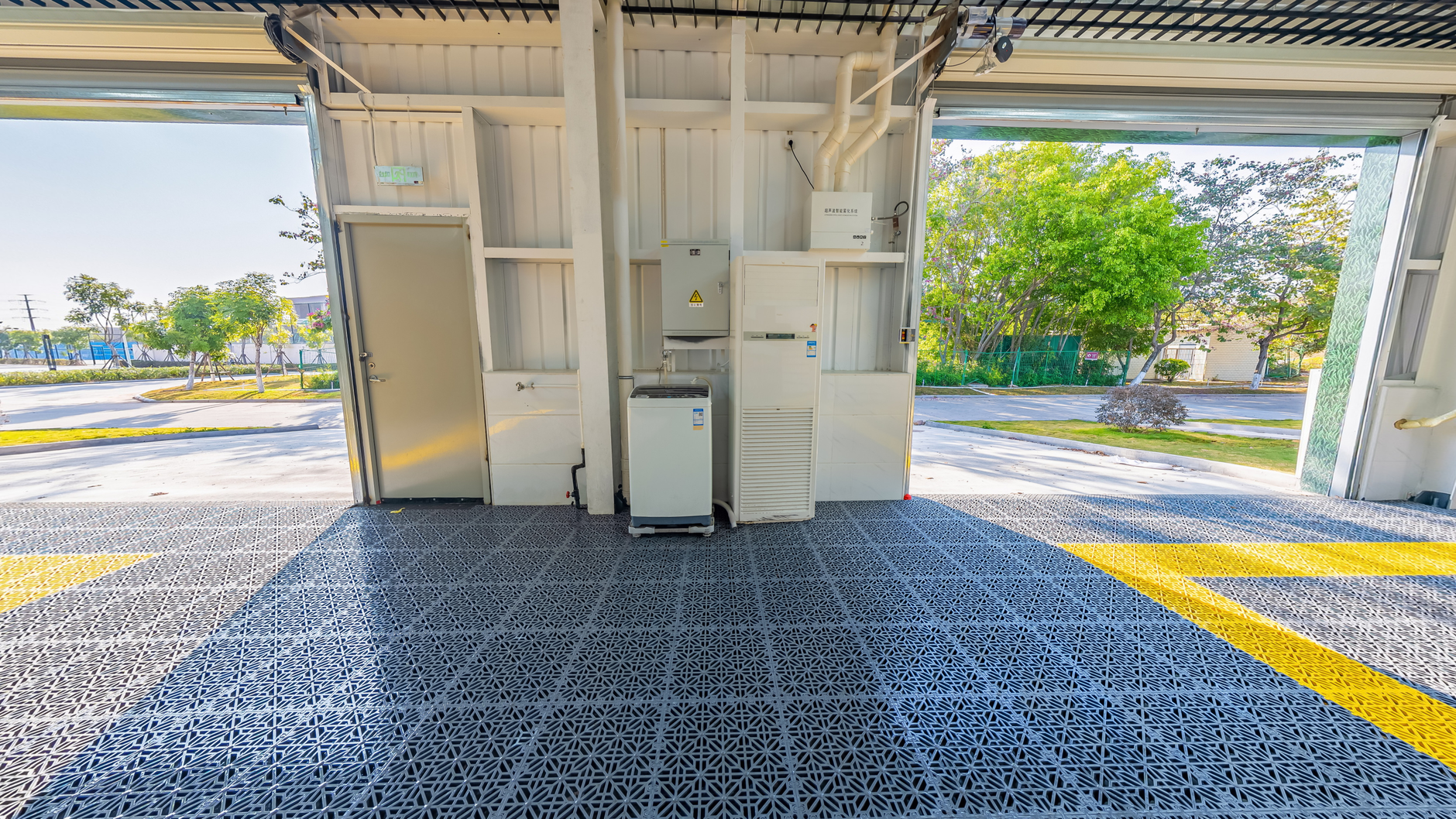
Polyaspartic flooring carries four significant disadvantages: material costs run 2-3× higher than commercial-grade epoxy, the 15-45 minute pot life creates extreme application pressure with zero room for error, surface preparation demands are unforgiving in ways that increase delamination risk, and the chemistry eliminates any realistic DIY option. For Northwoods garages in Wisconsin, Michigan, and Minnesota, these trade-offs rarely justify the premium when 100% solids epoxy delivers equivalent durability against road salt, de-icers, and freeze-thaw cycles at a fraction of the cost.
What Makes Polyaspartic Flooring Different from Epoxy?
Polyaspartic is an aliphatic polyurea coating that cures in 1-4 hours compared to epoxy's 24-72 hour cure window, and it resists UV yellowing better than traditional epoxy topcoats. In professional installations, polyaspartic typically serves as a fast-cure topcoat over an epoxy base layer rather than a standalone system. The rapid cure time matters for commercial spaces that can't afford multi-day downtime, but for residential garages where you can wait 48 hours, faster doesn't translate to better performance.
The chemistry also differs fundamentally. Polyaspartic uses isocyanate-based reactive groups that cross-link almost instantly once catalyst is added, while epoxy relies on amine hardeners that cure through a slower exothermic reaction. This speed advantage comes with serious constraints that affect both professional applicators and final project costs.
For enclosed Northwoods garages that never see direct sunlight, the UV resistance advantage disappears entirely. You're paying for a feature your floor will never use.
Disadvantage #1: Material Costs Run 2-3× Higher Than Quality Epoxy
Polyaspartic materials alone cost $4-$8 per square foot compared to $2-$4 per square foot for 100% solids epoxy. The resin chemistry driving that premium—aliphatic polyurea compounds with rapid cross-linking agents—costs significantly more to manufacture than epoxy resins. For a typical 400 square foot garage, the material cost difference alone ranges from $800 to $1,600 before labor.
That delta doesn't include the additional complexity costs: faster application requires more experienced installers who command higher rates, waste from unused mixed batches increases material consumption by 10-15%, and the narrow application window often requires larger crews to finish before pot life expires.
Cost breakdown for 400 sq ft garage:
- Polyaspartic system: $1,600-$3,200 materials + $1,200-$2,000 labor = $2,800-$5,200 total
- Commercial-grade epoxy: $800-$1,600 materials + $800-$1,400 labor = $1,600-$3,000 total
- Premium difference: $1,200-$2,200 for minimal performance gain in enclosed spaces
Revolution Epoxy's commercial-grade systems deliver the durability Northwoods homeowners need—salt resistance, chemical tolerance, impact strength—without the polyaspartic markup.
Why the Premium Doesn't Always Deliver Proportional Value
Fast cure time matters when a retail store loses $10,000 per day of closure or a warehouse can't halt operations for 48 hours. For residential garages, the ability to park your truck 4 hours after installation versus 24 hours later doesn't justify doubling your project cost. You're buying speed you don't need.
UV stability prevents yellowing and chalking in outdoor applications where sunlight hits the surface daily. Wisconsin, Michigan, and Minnesota garages rarely face direct sun exposure—your floor sits in a climate-controlled or semi-controlled enclosure where UV degradation isn't a factor. The chemistry advantage that matters for pool decks and outdoor patios delivers zero functional benefit for your garage.
Where polyaspartic makes sense: high-traffic commercial retail needing next-day reopening, outdoor patios and pool decks with constant UV exposure, food-service facilities requiring rapid sanitation compliance. Where it doesn't: enclosed residential garages where premium epoxy flooring built for Northwoods winters performs identically at half the cost.
Disadvantage #2: Extremely Narrow Application Window Creates Risk
Polyaspartic pot life runs 15-45 minutes depending on ambient temperature, compared to epoxy's 45-90 minute working window. Once you mix catalyst into resin, the clock starts—and it doesn't stop. In the Northwoods climate with temperature and humidity swings, applicators must work at speed or waste the entire mixed batch.
That pressure creates quality risks. Rushing to beat pot life expiration leads to visible application errors: streaking where roller passes overlap inconsistently, air bubbles trapped because squeegee work happened too fast, uneven film thickness that creates shiny and dull patches. These defects become permanent once the coating cures.
What happens during a rushed polyaspartic application:
- Installer mixes 2-gallon batch with 20-minute pot life remaining
- Coverage rate requires 25 minutes for proper technique
- Applicator accelerates roller speed, sacrificing even distribution
- Coating begins gelling mid-application, creating texture inconsistencies
- No opportunity to back-roll or correct errors before set occurs
Professional applicators absorb this risk because they have systems, experience, and crew coordination to work within the window. For anyone without dozens of installs under their belt, the margin for error is zero. Epoxy's longer pot life allows methodical application, error correction, and proper technique—critical for achieving the showroom finish Revolution Epoxy delivers consistently.
Disadvantage #3: Surface Preparation Demands Are Unforgiving
Polyaspartic bonds aggressively but requires near-perfect concrete profiling at CSP 2-3 minimum (Concrete Surface Profile standards). Any residual moisture, petroleum contamination, efflorescence, or inadequate mechanical abrasion leads to delamination within months. The chemistry doesn't forgive marginal surface conditions the way epoxy's slight chemical tooth advantage can.
Cold Northwoods concrete retains moisture longer than substrates in warmer climates. Spring thaw, fall humidity, and basement slabs with minimal vapor barriers all increase moisture content that polyaspartic cannot tolerate. The coating's impermeability traps moisture underneath, causing blistering and bond failure.
Surface prep requirements that can't be skipped:
- Diamond grinding to expose aggregate and create proper profile—acid etching alone fails
- Moisture testing with calcium chloride kits showing <3 lbs/1000 sq ft/24 hours
- Complete oil and chemical removal using degreasers and mechanical scrubbing
- Substrate temperature verification between 50-90°F before application begins
Revolution Epoxy uses professional diamond grinding equipment and moisture meters on every installation because proper prep determines whether your floor lasts 2 years or 20 years. Polyaspartic's intolerance for prep shortcuts means the difference between a successful install and a $5,000 failure is often invisible to homeowners until delamination starts.
Disadvantage #4: Temperature and Humidity Sensitivity Limits Install Windows
Polyaspartic requires substrate temperatures between 50-90°F and relative humidity below 85% during application and initial cure. In Wisconsin, Michigan, and Minnesota, that eliminates late fall, winter, and early spring installation in unheated garages. The seasonal window shrinks to roughly May through September—and even then, morning humidity or afternoon heat spikes can halt work.
Epoxy tolerates wider conditions. Slow-cure formulations work down to 40°F substrate temperatures, and humidity tolerance extends to 90%+ with proper ventilation. This flexibility means professional installers can schedule year-round, matching homeowner timelines rather than waiting for ideal weather windows.
Northwoods climate challenges for polyaspartic:
- March-April: substrate temps below 50°F despite ambient warmth
- June-August: afternoon garage temps exceed 95°F, accelerating pot life to under 15 minutes
- September-October: morning humidity regularly tops 85%, preventing proper cure
- November-February: installation impossible without supplemental heating systems
Revolution Epoxy schedules installations across all four seasons using engineered epoxy systems formulated for cold-climate application. We don't tell homeowners to wait six months for the right weather—we use chemistry designed for the Northwoods calendar.
Disadvantage #5: No Realistic DIY Path—Professional Application Mandatory
The combination of 15-45 minute pot life, strict 1:1 or 2:1 mixing ratios requiring gram-scale precision, and zero opportunity to correct errors mid-application eliminates any DIY option. Big-box stores don't stock polyaspartic garage kits for exactly this reason—the failure rate for untrained applicators approaches 90%.
Compare that to epoxy, where experienced DIYers can achieve acceptable results using big-box kits with 60+ minute pot lives and more forgiving mix ratios. We don't recommend DIY epoxy either—surface prep and application technique still determine long-term performance—but the possibility exists. With polyaspartic, it doesn't.
Why DIY polyaspartic fails:
- Mixing errors of even 5% throw off cure chemistry, causing soft spots or brittleness
- Pot life expires before homeowner completes coverage, wasting $200-$400 in materials per batch
- Application speed required to beat gel time creates streaks, holidays, and uneven thickness
- Surface prep shortcuts (rental grinder instead of professional shot-blasting) lead to delamination within 6-12 months
Failed polyaspartic projects require complete removal—grinding off the coating and starting over—before re-coating. That's $2-$4 per square foot in removal costs before you've even begun the second attempt. Professional installation from Revolution Epoxy costs less than DIY failure plus professional correction, and includes surface prep, commercial-grade materials, and a satisfaction guarantee.
When Does Polyaspartic Make Sense vs. Premium Epoxy?
Polyaspartic delivers genuine advantages in three scenarios: outdoor patios and pool decks with constant UV exposure, commercial retail and food-service spaces requiring next-day operational return, and extremely high-traffic industrial environments where 4-hour cure prevents costly downtime. In those applications, the premium cost is justified by performance requirements and revenue protection.
For Northwoods residential garages, the hybrid approach makes the most sense when speed matters: 100% solids epoxy base coat with a polyaspartic topcoat seal. This delivers the chemical resistance and bond strength of epoxy with the fast-cure convenience of polyaspartic, at roughly 60% the cost of a full polyaspartic system.
When each chemistry wins:
- Full polyaspartic system: Outdoor exposed surfaces, commercial spaces with <12 hour downtime windows, jurisdictions requiring rapid occupancy compliance
- Epoxy/polyaspartic hybrid: Residential garages wanting 24-hour return-to-service, homeowners prioritizing UV resistance despite enclosed space, projects with premium budgets
- 100% solids epoxy system: All enclosed residential garages prioritizing durability, cost-effectiveness, and proven salt/chemical resistance for Northwoods conditions
Revolution Epoxy installs primarily commercial-grade epoxy systems because the chemistry is proven for Wisconsin, Michigan, and Minnesota climate demands. When clients want the absolute fastest return-to-service, we offer the hybrid approach—but we're transparent that for enclosed garages, you're paying for speed rather than superior long-term performance.
What Revolution Epoxy Recommends for Wisconsin, Michigan, and Minnesota Garages
Our standard recommendation is 100% solids epoxy systems engineered specifically for road salt, calcium chloride de-icers, and the freeze-thaw cycling that destroys inferior coatings. These commercial-grade formulations deliver the durability Northwoods homeowners need without the polyaspartic material markup or application complexity.
The system includes diamond-ground surface preparation to CSP-3 profile, moisture barrier primer on slabs with vapor transmission concerns, pigmented 100% solids epoxy base coat at 20-30 mils thickness, decorative vinyl flake broadcast for slip resistance and visual depth, and clear polyurethane or polyaspartic topcoat seal. Installation takes 1-2 days with 24-48 hour cure before light traffic and 7 days before full load.
Why this system works for the Northwoods:
- Chemical resistance handles road salt, battery acid, oil, antifreeze, and hydraulic fluids without staining or etching
- Slip-resistant vinyl flake texture prevents falls even when wet from snow melt
- Thermal shock tolerance survives -30°F to 120°F temperature swings without cracking
- Satisfaction guarantee and professional installation eliminate the guesswork and risk
Cost runs $1,600-$3,000 for typical 400 square foot garages—professional durability without paying the polyaspartic premium for features your enclosed garage doesn't need. Get a free quote for professional epoxy installation and see the concrete-to-showroom transformation that lasts decades, not just years.
Frequently Asked Questions
Is polyaspartic flooring better than epoxy for garages?
Not for most Northwoods garages. Polyaspartic cures faster and resists UV yellowing, but those advantages matter more for commercial spaces or outdoor applications. For enclosed residential garages in Wisconsin, Michigan, and Minnesota, 100% solids epoxy delivers equivalent durability, superior chemical resistance to road salt and de-icers, and costs 40-60% less while offering a wider installation window across seasons.
Why is polyaspartic flooring so much more expensive?
Polyaspartic resin chemistry costs 2-3× more than epoxy per gallon, and the rapid cure formulation requires premium raw materials. A typical 400 sq ft garage floor uses $1,600-$3,200 in polyaspartic materials alone versus $800-$1,600 for commercial-grade epoxy. The cost premium buys faster return-to-service and UV stability—benefits that rarely justify the expense for climate-controlled residential garages.
Can I apply polyaspartic flooring myself?
No. Polyaspartic pot life runs 15-45 minutes, leaving zero margin for mixing errors, application delays, or learning curve. The coating sets so fast that streaks, bubbles, and uneven coverage become permanent. Unlike epoxy systems that allow 60-90 minute working windows, polyaspartic demands professional equipment, experience, and speed. DIY attempts typically fail and require expensive removal before professional re-coating.
What are the biggest problems with polyaspartic garage floors?
The four critical issues: extremely short working time creates application stress and error risk; surface prep must be flawless or delamination occurs; temperature and humidity windows are narrow, limiting seasonal install availability in the Northwoods; and material costs run double to triple quality epoxy with minimal performance gain for enclosed garage environments where UV exposure and instant cure aren't factors.
Does polyaspartic flooring work in cold climates like Wisconsin?
Polyaspartic performs well once cured, but installation in Wisconsin, Michigan, and Minnesota presents challenges. Substrate temps must stay between 50-90°F, and humidity below 85%—conditions difficult to meet in unheated garages during spring, fall, and winter. Epoxy systems tolerate lower temps and wider application windows, making them more practical for Northwoods year-round scheduling. Once installed, both chemistries handle freeze-thaw cycles and road salt equally well.
Should I use polyaspartic or epoxy for my Minnesota garage floor?
For Minnesota garages, commercial-grade 100% solids epoxy is the better choice. It handles road salt, de-icers, and thermal shock as effectively as polyaspartic, costs significantly less, and allows proper application even during shoulder seasons. Polyaspartic's advantages—UV resistance and 4-hour cure—don't impact enclosed garage performance. Revolution Epoxy installs epoxy systems year-round across the Northwoods with 1-2 day turnarounds and satisfaction guarantees, delivering showroom results without the polyaspartic premium.
What's the lifespan difference between polyaspartic and epoxy floors?
In residential garages, both properly installed polyaspartic and 100% solids epoxy systems last 15-20+ years. The difference isn't longevity—it's cost and application complexity. Polyaspartic resists UV yellowing better, but UV exposure is negligible in enclosed garages. Both handle abrasion, chemicals, and impact equivalently. The durability gap that justifies polyaspartic's premium exists mainly in outdoor or high-UV commercial environments, not Northwoods home garages.