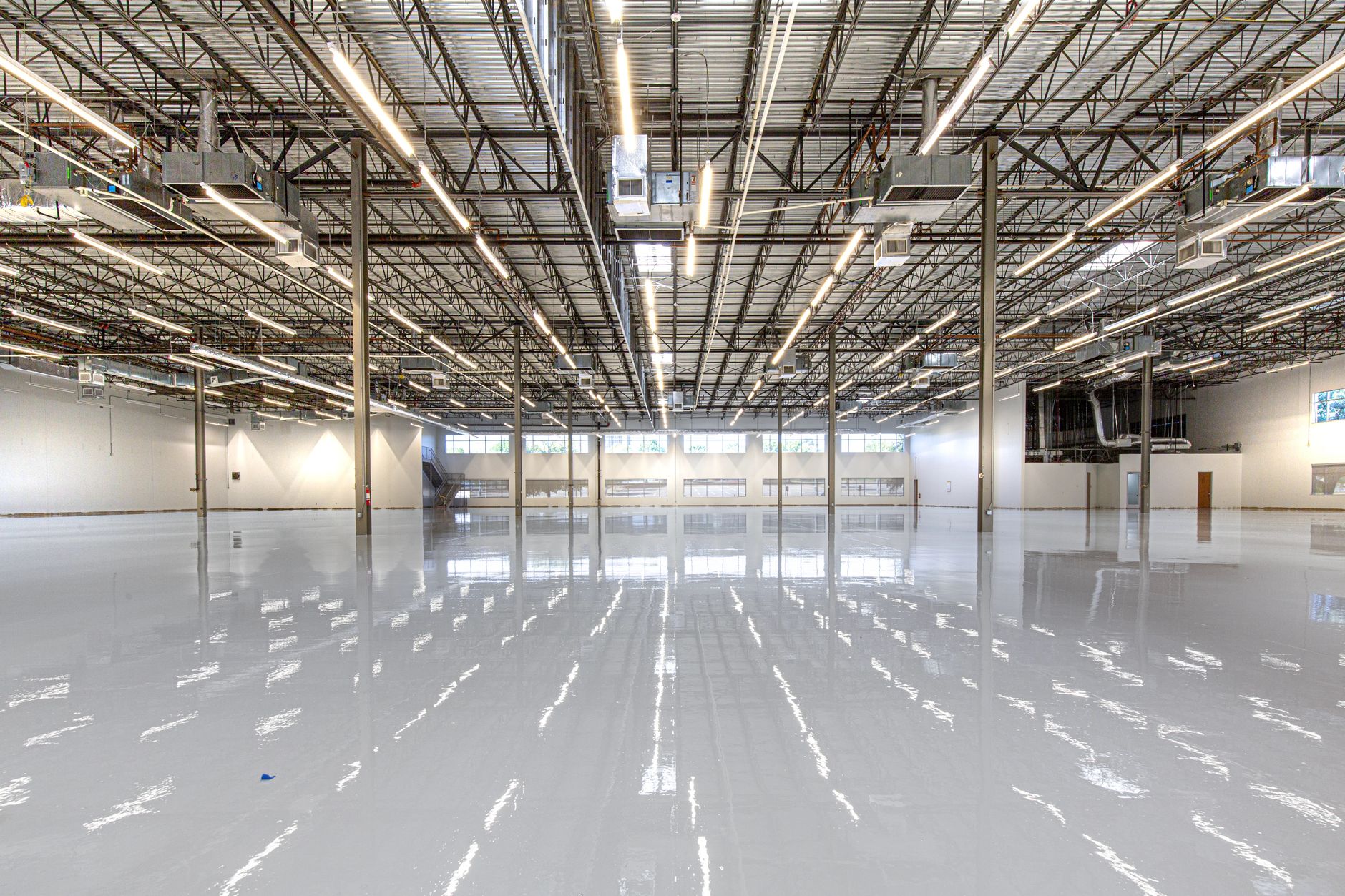
Professionally installed epoxy on a 1000 sq ft garage floor costs between $3,000 and $8,000 in 2026, depending on the system you choose and the condition of your concrete. As of 2026-05-28, commercial-grade 100% solids epoxy with vinyl flake finishes typically runs $3–$5 per sq ft installed, while metallic or broadcast quartz systems reach $6–$8 per sq ft. These prices reflect the Wisconsin, Michigan, and Minnesota market for professional-grade systems engineered to survive Northwoods winters—not the watered-down big-box kits that fail within a year under salt, de-icers, and hot tire pickup.
What Is the Average Cost to Epoxy a 1000 Sq Ft Garage Floor in 2026?
For a 1000 sq ft garage, you're looking at $3,000–$8,000 for professional installation in 2026. The range depends on which system you select: vinyl flake epoxy costs $3,000–$5,000 (or $3–$5/sq ft), metallic epoxy runs $5,000–$7,000 ($5–$7/sq ft), and broadcast quartz systems land at $6,000–$8,000 ($6–$8/sq ft). These figures are regional averages for Wisconsin, Michigan, and Minnesota and assume commercial-grade 100% solids epoxy with proper surface prep, base coats, and polyaspartic topcoats.
Big-box DIY kits cost $200–$500 in materials alone, but they use water-based or low-solids formulations (40–60% epoxy versus 100% in professional systems) that delaminate within 1–2 years under Northwoods freeze-thaw cycles, road salt, and chemical exposure. You'll spend less upfront, but you'll be re-coating—or ripping out a failed floor—before your second winter.
Vinyl Flake Epoxy: $3,000–$5,000 for 1000 Sq Ft
Vinyl flake epoxy is the most popular system for Northwoods garages, costing $3–$5 per sq ft installed. The textured finish provides slip resistance even when wet, hides minor concrete imperfections, and offers limitless color combinations (blend tan, gray, black, or bold hues to match your style). We engineer these systems for salt and chemical resistance—critical when you're tracking de-icers and road grime into the garage all winter.
Installation takes 1–2 days from concrete to cured floor. Day 1 covers diamond grinding, crack repair, primer, base epoxy, and flake broadcast. Day 2 involves scraping excess flake and applying the clear polyaspartic topcoat. You can park on it within 24 hours, with full cure in 3–7 days. This is the workhorse system: durable, customizable, and built for real-world abuse.
Metallic Epoxy: $5,000–$7,000 for 1000 Sq Ft
Metallic epoxy delivers showroom-level visuals at $5–$7 per sq ft for a 1000 sq ft garage. The finish has a liquid-metal depth with reflective swirls and unique patterns—no two floors look identical due to the hand-troweled application technique. This system requires pristine surface prep (any imperfection telegraphs through the glossy finish), which adds labor cost compared to vinyl flake systems.
Despite its high-end aesthetic, metallic epoxy still uses the same commercial-grade 100% solids base and polyaspartic topcoat, so durability matches vinyl flake. The difference is visual: where flake hides flaws, metallic showcases the artistry of the coating itself. If you want your garage to turn heads, this is the system—but budget for the premium prep work that makes it shine.
Broadcast Quartz: $6,000–$8,000 for 1000 Sq Ft
Broadcast quartz systems cost $6–$8 per sq ft and deliver the highest-traffic durability you can install in a residential garage. Dense quartz aggregate creates a stone-like, almost granite appearance with maximum abrasion resistance. This is commercial-facility grade applied to your home—ideal for multi-vehicle garages, workshops with heavy toolboxes, or basements where you're rolling equipment across the floor daily.
The quartz layer is broadcast into wet epoxy, then sealed with a clear topcoat, creating a textured surface that never becomes slick. Lifespan exceeds vinyl flake and metallic systems (we're talking 20+ years with proper maintenance), and the finish handles impacts, chemical spills, and dragging loads without chipping or wearing through. If your garage doubles as a workspace and you need a floor that won't quit, broadcast quartz justifies the cost.
What Factors Drive the Cost of Epoxy Flooring?
Five main variables determine what you'll pay for professional epoxy flooring in 2026. Surface condition is the first: cracks, oil stains, uneven concrete, or previous coatings require additional prep labor—diamond grinding can't fix structural issues, so crack repair and oil stain removal add time and materials. Surface prep alone accounts for 40–50% of total project cost, and skipping it guarantees delamination.
System type is the second factor. Vinyl flake uses less expensive decorative media than metallic pigments or quartz aggregate, so material costs vary. Metallic systems also demand more skilled labor to manipulate the coating into swirled patterns, adding to installation expense.
Coating thickness is third: 100% solids epoxy applies thicker (typically 10–20 mils) than water-based or solvent-thinned products (2–5 mils), using more material per sq ft but delivering exponentially better durability. You pay for what goes down—thicker coatings resist hot tire pickup, impact damage, and abrasion over decades, not months.
Finish coats are fourth. Polyaspartic or polyurea topcoats add UV resistance, faster cure times (allowing same-day or next-day topcoat application), and enhanced chemical resistance. These topcoats cost an additional $0.50–$1.50 per sq ft but extend floor lifespan and prevent yellowing under sunlight exposure.
Regional labor rates round out the list. In Wisconsin, Michigan, and Minnesota, skilled epoxy installers command fair wages for working in often-challenging conditions (cold garages, moisture-prone concrete, tight installation windows). You're paying for expertise that prevents costly failures, not just a coating application.
Why Do Professional Epoxy Costs Exceed Big-Box DIY Kits by 10x?
Big-box kits cost $200–$500 and use water-based or low-solids epoxy—often 40–60% actual epoxy resin, with the rest being water or solvents that evaporate, leaving a thin, weak film. Professional systems use 100% solids formulations, meaning every ounce that goes down stays down as a thick, durable coating. The chemistry difference alone explains half the cost gap.
Surface prep is the other half. Professional installation includes diamond grinding or shot blasting to mechanically profile the concrete, creating the rough texture epoxy needs to bond at a molecular level. We perform moisture testing to detect vapor transmission that causes delamination, repair cracks with structural epoxy fillers, and apply multi-coat systems (primer, base, topcoat) for redundant protection. DIY kits assume you'll "clean and acid-etch" the floor—a process most homeowners rush or skip entirely, guaranteeing bond failure when hot tires sit on the coating or freeze-thaw cycles stress the surface.
Professional systems carry 5–15 year warranties because the installer stakes their reputation on surface prep and product quality. DIY failures offer no recourse—when your $400 kit peels up after 18 months, you're out the materials, your labor, and the cost of grinding off the failed coating before starting over. That big-box "bargain" just became a $2,000 mistake once you factor in professional removal and re-coating.
Learn more about Revolution Epoxy's process to see how commercial-grade materials and prep work deliver floors that last 15–20+ years.
How Does Climate Impact Epoxy Flooring Cost in Wisconsin, Michigan, and Minnesota?
Northwoods winters demand epoxy formulations engineered for salt resistance, freeze-thaw stability, and temperature swings from -20°F to 90°F. We use chemical-resistant base coats that shrug off de-icers, road salt, and the corrosive slurry you track in all winter. Generic or mild-climate epoxy products crack, discolor, or delaminate when exposed to these conditions—chemistry that works in Arizona fails spectacularly in Marquette or Hayward.
Moisture mitigation is also climate-specific. Concrete in cold regions often retains higher moisture content due to freeze-thaw cycles driving water into the slab. Professional installers test for vapor transmission and apply moisture barriers when needed, adding cost but preventing the blistering and delamination that moisture causes. Big-box kits skip this step entirely, assuming dry concrete—a dangerous assumption in the Upper Midwest.
Polyaspartic topcoats cure even in sub-zero temperatures, enabling year-round installation and preventing spring/summer scheduling backlogs. This flexibility costs more in materials (polyaspartic resin is pricier than standard epoxy topcoats), but it means you can transform your garage in January instead of waiting until May. Climate-specific engineering isn't a markup—it's the reason professional-grade epoxy lasts 15–20+ years in Northwoods garages while DIY kits fail in 1–2.
What Is Included in a Professional 1000 Sq Ft Epoxy Installation?
A complete professional installation delivers eight critical steps. First, diamond grinding or shot blasting opens the concrete's pores, creating the mechanical bond profile epoxy requires—this step alone separates professional jobs from DIY attempts. Second, crack and spall repair uses structural epoxy fillers to prevent movement and moisture intrusion.
Third, moisture testing identifies vapor transmission issues, with vapor barriers applied if readings exceed safe thresholds. Fourth, a primer coat penetrates and seals the concrete, especially important on older or porous slabs. Fifth, the base epoxy coat goes down—pigmented, 100% solids, typically 10–15 mils thick—providing the foundation for durability.
Sixth, decorative media (vinyl flake, metallic pigment, or quartz aggregate) is broadcast into the wet base coat, creating texture, slip resistance, and visual interest. Seventh, excess material is scraped and vacuumed away once the base coat gels, leaving an even surface. Eighth, the clear polyaspartic or polyurea topcoat seals everything—2–3 mils thick, UV-stable, chemical-resistant—protecting the base coat and decorative layer for decades.
The timeline runs 1–2 days for most 1000 sq ft garages: Day 1 handles prep and base coat, Day 2 applies the topcoat and final cure. You can walk on the floor in 8–12 hours, park light vehicles after 24 hours, and achieve full chemical resistance in 3–7 days. Cleanup and disposal are included—your garage goes from dusty concrete to finished showroom without you lifting a finger.
Is a 1000 Sq Ft Garage Floor the Same Cost per Sq Ft as Smaller or Larger Projects?
No—economies of scale apply. Garages under 500 sq ft often see higher per-sq-ft costs ($6–$10/sq ft) due to minimum mobilization charges. Installers must transport diamond grinders, epoxy mixers, and safety equipment regardless of project size, so smaller jobs carry higher overhead per square foot. You're still paying for the same prep rigor and material quality, but fixed costs hit harder on 300 sq ft than 1000.
Larger projects (2000+ sq ft) may drop to $2.50–$4/sq ft as material bulk pricing kicks in and labor efficiency improves—mixing larger batches, covering more area per setup, and minimizing travel between small jobs. However, complexity can offset savings: multiple bays, floor drains, control joints, or uneven slabs add labor even on large projects.
A 1000 sq ft garage hits the sweet spot—large enough to avoid minimum charges but not so sprawling that surface variability complicates installation. Most two-car garages fall within the 900–1100 sq ft range, and contractors price this size competitively because it's their bread-and-butter market. That said, quotes should always be project-specific. Advertised garage sizes often differ from actual measurements by 5–10%, and an on-site evaluation prevents surprise overages when the floor turns out to be 1050 sq ft instead of 950.
How Do You Get an Accurate Quote for a 1000 Sq Ft Garage Floor?
Request an on-site evaluation from a licensed installer—verbal or online estimates can't account for concrete condition, moisture levels, or site-specific challenges. The installer will assess cracks, oil stains, previous coatings (paint, sealers, or failed epoxy must be removed), measure exact square footage, and discuss finish preferences: color, texture, sheen level, and system type.
Red flags in quotes include verbal-only estimates (no paper trail if disputes arise), no mention of surface prep (diamond grinding, moisture testing, crack repair), and prices significantly below $3/sq ft for 2026. Anything under that threshold signals water-based epoxy, thin-mil coatings, or skipped prep steps—all recipes for failure in Northwoods climates.
Reputable installers provide written quotes detailing system specifications (e.g., "100% solids epoxy base, vinyl flake broadcast, polyaspartic topcoat"), warranty terms (coverage duration, what's included/excluded), and a clear timeline from start to cured floor. Ask about moisture testing, crack repair protocols, and what happens if unexpected issues arise during prep—transparency at the quote stage prevents costly surprises mid-project.
Get a free quote from Revolution Epoxy with no-pressure consultation across Wisconsin, Michigan, and Minnesota. We measure, assess, and provide written estimates so you know exactly what you're paying for—and what you're getting in return.
Frequently Asked Questions
How much does professional epoxy cost per square foot in 2026?
As of 2026-05-28, professional-grade epoxy flooring costs $3–$8 per square foot installed, depending on system type. Vinyl flake systems run $3–$5/sq ft, metallic finishes $5–$7/sq ft, and broadcast quartz $6–$8/sq ft. These prices reflect commercial-grade 100% solids epoxy with proper surface prep, base coats, and polyaspartic topcoats. Big-box DIY kits cost less upfront ($200–$500 materials) but typically fail within 1–2 years in Northwoods climates due to inferior chemistry and lack of professional surface preparation.
What is the total cost to epoxy a 1000 sq ft garage floor?
For a 1000 sq ft garage, professional epoxy installation ranges from $3,000 to $8,000 in 2026. Vinyl flake systems (most popular) cost $3,000–$5,000, metallic epoxy $5,000–$7,000, and broadcast quartz $6,000–$8,000. This includes diamond grinding, crack repair, moisture testing, base epoxy, decorative layer, and clear topcoat. Installation typically takes 1–2 days, with light traffic allowed after 24 hours and full cure in 3–7 days. These prices reflect Wisconsin, Michigan, and Minnesota regional labor and material costs.
Why is professional epoxy so much more expensive than DIY kits?
Professional epoxy uses 100% solids formulations (no water or solvents to evaporate), creating a thicker, more durable coating than big-box kits (often 40–60% solids). Surface prep—diamond grinding, crack repair, moisture mitigation—accounts for 40–50% of project cost and is critical for bond strength. DIY kits skip or inadequately perform these steps, leading to delamination under hot tires, salt, and freeze-thaw cycles common in Northwoods garages. Professional systems carry 5–15 year warranties and last 15–20+ years, while DIY attempts typically fail within 12–24 months, requiring costly removal and re-coating.
Does a 1000 sq ft garage cost less per square foot than smaller projects?
Yes, economies of scale apply. Garages under 500 sq ft often see $6–$10/sq ft due to minimum mobilization charges (equipment transport, crew scheduling). At 1000 sq ft, costs typically drop to $3–$8/sq ft as material bulk pricing and labor efficiency improve. Projects over 2000 sq ft may reach $2.50–$4/sq ft, though added complexity (multiple bays, drains, control joints) can offset savings. For accurate pricing, request an on-site evaluation—advertised garage sizes often differ from actual square footage by 5–10%, affecting final cost.
What is included in the cost of professional epoxy flooring?
Professional installation includes diamond grinding or shot blasting to profile the concrete, crack and spall repair with epoxy fillers, moisture testing and vapor barriers if needed, primer coat, 100% solids base epoxy, decorative vinyl flake/metallic pigment/quartz broadcast, scraping and vacuuming excess material, and a clear polyaspartic or polyurea topcoat. The process typically spans 1–2 days: Day 1 for prep and base coat, Day 2 for topcoat. The coating is ready for light traffic in 24 hours and fully cured in 3–7 days. Reputable installers also include cleanup, disposal, and written warranties.
How does climate affect epoxy flooring cost in Wisconsin, Michigan, and Minnesota?
Northwoods winters require salt-resistant, freeze-thaw stable epoxy formulations engineered to handle de-icers, road chemicals, and temperature swings from -20°F to 90°F. Professional-grade systems use chemical-resistant base coats and polyaspartic topcoats that cure even in sub-zero temperatures, enabling year-round installation. These climate-specific materials and techniques add to upfront cost compared to mild-climate regions, but prevent the delamination and cracking common with generic or DIY products. Proper moisture mitigation is also critical—concrete in cold climates often retains higher moisture levels, requiring vapor barriers that box-store kits omit.
How do I get an accurate quote for my 1000 sq ft garage floor?
Request an on-site evaluation from a licensed installer. They will assess concrete condition (cracks, oil stains, previous coatings), measure exact square footage (advertised garage sizes often vary by 5–10%), test for moisture, and discuss finish preferences (color, texture, sheen). Reputable quotes are written, itemize surface prep and coating specs, include warranty terms, and provide a clear timeline. Red flags include verbal-only estimates, no mention of diamond grinding or moisture testing, and prices below $3/sq ft (indicating water-based or thin-mil products). Revolution Epoxy's premium garage flooring systems come with free consultations across Wisconsin, Michigan, and Minnesota to ensure transparent, project-specific pricing.