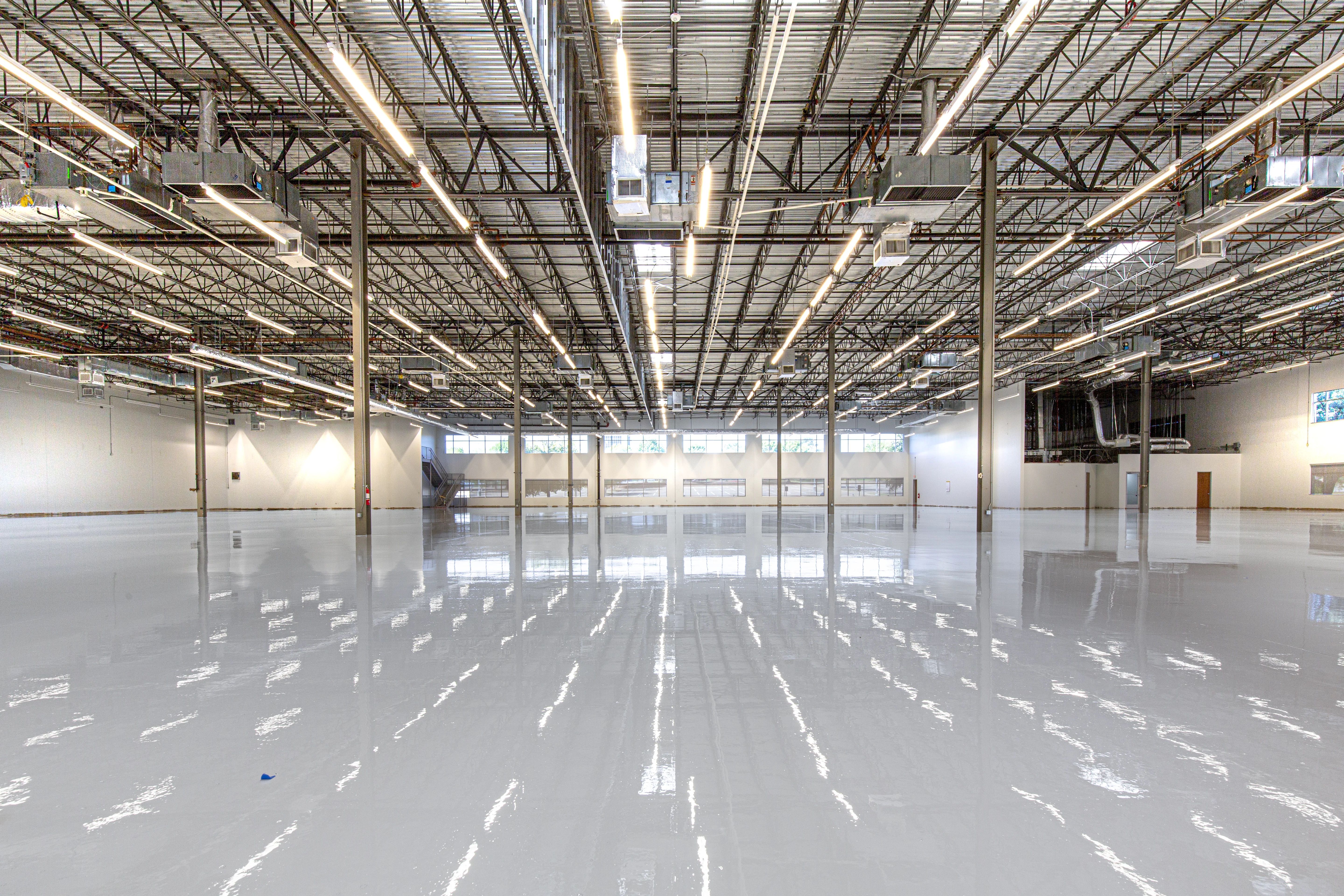
Professional epoxy flooring for a standard 2-car garage (400–500 square feet) costs $1,800 to $4,500 installed in 2025, with most homeowners paying $2,200–$3,000 for vinyl flake systems. The final price depends on the coating system you choose, your concrete's condition, and regional labor rates across Wisconsin, Michigan, and Minnesota.
What Is the Average Cost to Epoxy a 2-Car Garage Floor?
Expect to pay between $1,800 and $4,500 to professionally epoxy a 2-car garage floor in 2025. For a typical 400–500 square foot garage, vinyl flake systems run $2,200–$3,000, metallic finishes cost $3,200–$4,500, and quartz broadcast systems fall between $2,800–$3,800. These figures translate to $4.50–$9.00 per square foot installed and include all prep work, commercial-grade materials, and professional installation.
Revolution Epoxy serves Wisconsin, Michigan, and Minnesota with transparent pricing and free on-site quotes. Most 2-car garage projects take 1–2 days from prep to cure, meaning you'll have a showroom-quality floor by the weekend.
Price by Epoxy System Type
The coating system you select drives the bulk of your project cost. Decorative vinyl flake systems—the most popular choice—cost $2,200–$3,000 for a 2-car garage and deliver slip-resistant texture through colored vinyl chips broadcast into the base coat. You can customize color blends to match your home's aesthetic while gaining safety traction that's critical for icy boots and wet tires.
Metallic epoxy finishes run $3,200–$4,500 and create reflective depth with unique, swirling patterns that make each floor one-of-a-kind. This high-end option works well for show garages or spaces where visual impact matters as much as durability.
Quartz broadcast systems cost $2,800–$3,800 and embed fine quartz aggregate for a stone-like appearance with extreme durability. These systems handle heavy vehicle traffic and tool drops better than any other residential option, making them ideal if your garage doubles as a workshop.
All three systems use commercial-grade 100% solids epoxy engineered specifically for Northwoods winters. That means resistance to road salt, calcium chloride de-icers, freeze-thaw cycles, and the chemicals you track in from December through March.
Regional Labor Rates in Wisconsin, Michigan, and Minnesota
Installation costs in the Northwoods reflect skilled labor trained to work in variable temperatures and to apply coatings that bond properly despite humidity swings. Professional installers in Wisconsin, Michigan, and Minnesota charge $40–$65 per hour, but you're paying for expertise that ensures proper surface profiling, moisture testing, and climate-appropriate curing schedules.
Revolution Epoxy completes most 2-car garages in 1–2 days—faster than competitors who stretch projects over 3–4 days. Efficient scheduling means lower labor costs and less disruption to your routine, whether you need your garage back for daily parking or weekend projects.
What Factors Affect the Total Cost of Garage Floor Epoxy?
Five variables determine your final epoxy cost: concrete condition, square footage, coating system complexity, moisture issues, and whether you need to remove existing coatings. A garage with hairline cracks and minor staining costs less to prep than one with oil-soaked concrete and spalling from years of road salt exposure.
Concrete in poor condition requires crack filling with flexible polyurea or epoxy filler, which adds $200–$400 to your quote. Oil stains need degreasing and sometimes grinding to remove penetrated petroleum, adding another $100–$300. If your slab shows signs of moisture vapor transmission—a common issue in basements or garages built on poorly compacted fill—vapor mitigation systems add $200–$600 but prevent catastrophic delamination down the road.
Square footage beyond 500 square feet increases cost proportionally. A 600-square-foot garage runs $2,640–$5,400 depending on the system, while a compact 350-square-foot space might cost $1,575–$3,150.
Removing existing coatings—old paint, failed epoxy, or garage floor sealers—costs $1–$2 per square foot because installers must diamond-grind down to bare concrete to ensure proper adhesion. Skipping this step guarantees failure within months.
Custom design elements like company logos, border patterns, or intricate color transitions add $300–$800 depending on complexity. Most homeowners stick with standard vinyl flake blends, but if you want your garage to double as a man cave or showroom, the visual payoff justifies the premium.
Concrete Prep and Repair Costs
Proper surface preparation accounts for 30–40% of installation success. Diamond grinding—the gold standard—mechanically abrades the concrete to create the surface profile epoxy needs to bond. This costs more than acid etching but delivers exponentially better adhesion, especially on smooth-troweled or sealed concrete.
Crack filling with epoxy or polyurea filler prevents movement from telegraphing through your new floor. Hairline cracks under 1/8 inch wide cost $50–$100 to fill, while larger structural cracks requiring routing and flexible sealant run $150–$300.
Oil stain remediation involves degreasing agents, grinding, or shot blasting to remove petroleum that has penetrated the concrete's pores. Surface oil wipes away, but embedded stains require mechanical removal. Expect $100–$300 depending on severity.
Revolution Epoxy inspects your concrete during the free quote process and itemizes all prep work upfront. No surprise charges, no hidden fees—just transparent pricing based on what your floor actually needs.
Coating Thickness and Material Quality
Commercial-grade 100% solids epoxy goes on 15–20 mils thick (about the thickness of a credit card) and contains zero volatile organic compounds (VOCs). This creates a chemical bond with the concrete at the molecular level and forms a wear layer that withstands tire traffic, tool drops, and chemical spills for 15–20 years.
Water-based and solvent-based epoxy products—the kind sold in big-box stores—cure to just 2–4 mils thick. They're essentially thick paint. Within 1–3 years, hot tires lift the coating, road salt causes delamination, and you're back to bare concrete with wasted money and weekends.
Revolution Epoxy uses only commercial-grade 100% solids formulas topped with polyaspartic or polyurea topcoats that cure in hours and resist UV yellowing. Big-box kits skip the topcoat entirely or use thin epoxy as a "sealer," leaving your floor vulnerable to stains, scratches, and chemical damage.
The material quality difference isn't just about longevity. Thicker coatings fill small imperfections in the concrete, creating a smoother surface that's easier to clean. Oil, antifreeze, and salt residue wipe away instead of staining. That's the difference between a garage floor and a showroom floor.
How Does Professional Epoxy Compare to DIY Kit Pricing?
DIY epoxy kits from hardware stores cost $200–$600 in materials but fail within 1–3 years due to thin coatings, inadequate surface prep, and formulas not engineered for freeze-thaw cycles. You'll also spend $80–$150 per day renting a diamond grinder if you want proper surface preparation, plus 2–4 weekends of your time mixing, rolling, and broadcasting flake by hand.
When the coating fails—and water-based epoxy will fail in Northwoods climates—you'll buy another kit and start over. Over five years, you'll spend $800–$1,800 on materials and equipment rentals, not counting the 40+ hours of labor you could have spent on anything else.
Professional installation costs $2,200–$4,500 upfront but lasts 15–20 years with minimal maintenance. That's a one-time investment that pays for itself in year three when you're not recoating your floor yet again. You also get a warranty, professional-grade materials rated for commercial environments, and results that actually look like the photos on the kit box instead of the sad reality most DIYers end up with.
Calculate the total cost of ownership over five years: DIY costs $800–$1,800 plus your weekends and still leaves you with a compromised floor. Professional costs $2,200–$4,500 once and delivers a floor you'll show off to neighbors. The math favors professional installation, especially when you factor in the opportunity cost of your time.
Why Big-Box Store Kits Fail in Northwoods Climates
Water-based epoxy cannot withstand road salt, calcium chloride de-icers, freeze-thaw cycling, or the chemical soup that drips off your truck from November through April. The thin coating delaminates when moisture vapor pushes up through the concrete, which happens constantly in basements and uninsulated garages during temperature swings.
Hot-tire pickup—where tires literally peel the coating off on hot summer days—is endemic to thin epoxy. You'll see tire tracks through bare concrete after one season. Yellowing from UV exposure happens within months on water-based formulas because they lack UV inhibitors found in commercial topcoats.
Revolution Epoxy's 100% solids formula is engineered specifically for Wisconsin, Michigan, and Minnesota winters. The coating remains flexible enough to handle thermal expansion and contraction while staying rigid enough to resist abrasion. Anti-slip aggregate embedded in the topcoat maintains traction even when wet, and UV-stable chemistry prevents the yellowing that makes big-box epoxy look dingy within a year.
If you're going to invest the time and effort into a garage floor upgrade, use materials built for your climate. Anything less is money thrown away.
What Is Included in a Professional Epoxy Installation Quote?
A complete professional quote itemizes concrete surface prep (diamond grinding, crack repair, and cleaning), moisture testing to assess vapor transmission risk, primer coat application to seal porous concrete, base epoxy coat using commercial-grade 100% solids epoxy, decorative layer (vinyl flake broadcast, metallic pigment, or quartz aggregate), polyaspartic or polyurea topcoat for UV resistance and fast cure, labor, cleanup, and warranty coverage.
Revolution Epoxy provides free on-site quotes with transparent line-item pricing. You'll see exactly what you're paying for at each stage, from prep to topcoat. Most competitors lump everything into a single number, making it impossible to understand where your money goes or what corners might get cut.
The satisfaction guarantee means if you're not thrilled with the results, Revolution Epoxy makes it right. That peace of mind doesn't come with a $300 DIY kit from a hardware store.
Installation typically takes 1–2 days. Day one covers prep, crack repair, and base coat application. Day two handles flake broadcast, topcoat, and cleanup. Light foot traffic is safe after 24 hours, vehicle traffic after 72 hours. You'll have a fully cured, showroom-quality floor in less than a week from quote to completion.
How Long Does a Professional Epoxy Floor Last?
Professional 100% solids epoxy floors last 15–20 years in residential garages with minimal maintenance—just occasional sweeping and mopping with pH-neutral cleaner. That longevity assumes proper installation with diamond-ground surface prep, moisture testing, and a commercial-grade topcoat designed to resist UV, chemicals, and abrasion.
DIY kits last 1–3 years because water-based formulas can't handle thermal cycling, chemical exposure, or moisture vapor transmission. Garage floor paint lasts 6–12 months before hot tires lift it or salt eats through the thin film. You're essentially paying for temporary cosmetic improvement rather than a durable upgrade.
The topcoat determines long-term performance. Polyaspartic and polyurea topcoats cure in hours and form a wear layer 2–3 times harder than epoxy alone. They're also UV-stable, meaning your floor won't yellow or fade even in garages with large windows or door exposure.
Revolution Epoxy backs installations with warranty terms that cover delamination, cracking, and adhesion failure. If the floor fails due to material or installation defects, it gets fixed. That's a level of accountability DIY products simply can't offer.
Is Epoxy Flooring Worth the Investment for a 2-Car Garage?
Epoxy flooring delivers measurable ROI through increased home resale value (average $1,500–$3,000 boost), concrete slab protection that prevents costly replacement, effortless cleaning that saves hours per year, visual transformation from drab concrete to showroom quality, and slip-resistant safety in all weather conditions. The investment pays for itself in 3–5 years when you factor in avoided costs of resealing, painting, or replacing damaged concrete.
Unprotected concrete absorbs oil, antifreeze, and other chemicals that permanently stain and weaken the slab. Once damage penetrates beyond the surface, you're looking at $4,000–$8,000 to remove and replace the concrete. Epoxy creates an impermeable barrier that wipes clean, protecting your slab for decades.
Cleaning a bare concrete garage means scrubbing stains that never fully disappear. Epoxy wipes clean with a damp mop. Spills from oil changes, antifreeze flushes, or winter slush don't penetrate the surface. You'll spend minutes instead of hours maintaining your garage floor.
The visual transformation turns a dingy, stained slab into a floor you'd find in a luxury showroom. Neighbors notice. Potential buyers notice. If you've ever been embarrassed to park a nice car on cracked, oil-stained concrete, epoxy solves that problem permanently.
Slip resistance matters more in the Northwoods than most regions. Wet boots, icy tire tracks, and February slush turn bare concrete into a skating rink. Textured vinyl flake systems and quartz broadcast finishes provide traction even when wet, reducing fall risk for you and your family.
Compare epoxy to the alternative: resealing bare concrete every 1–2 years at $200–$400 per application, or repainting every year at $150–$300. Over 15 years, those recurring costs total $3,000–$6,000—more than a professional epoxy install that lasts the entire period without retreatment.
For a one-time investment of $2,200–$4,500, you get 15–20 years of durable, attractive, low-maintenance flooring that protects your concrete, boosts home value, and transforms your garage from utilitarian space to a room you actually want to spend time in. That's why premium epoxy garage floors across the Northwoods remain one of the highest-ROI home improvements for Wisconsin, Michigan, and Minnesota homeowners.
Frequently Asked Questions
How much does it cost to epoxy a 400 square foot 2-car garage?
A professional epoxy floor for a 400 sq ft 2-car garage typically costs $1,800 to $3,600 depending on the system. Vinyl flake systems average $2,200–$2,800, metallic finishes run $3,200–$3,600, and quartz broadcast systems cost $2,600–$3,200. This includes concrete prep, commercial-grade 100% solids epoxy, decorative layer, and polyaspartic topcoat. Revolution Epoxy provides free quotes with transparent pricing and completes most 2-car garages in 1–2 days.
What is the price per square foot for professional garage epoxy?
Professional epoxy flooring costs $4.50 to $9.00 per square foot installed, with vinyl flake systems at $5.50–$7.00/sq ft, metallic finishes at $8.00–$9.00/sq ft, and quartz broadcast at $7.00–$8.00/sq ft. This reflects commercial-grade 100% solids epoxy engineered for harsh climates, unlike big-box kits at $0.50–$1.50/sq ft that fail within 1–3 years. Revolution Epoxy uses materials built for Northwoods winters with road salt and de-icer resistance.
Why does professional epoxy cost more than DIY kits?
Professional epoxy uses commercial-grade 100% solids formulas that are 10–20 times thicker than DIY kits and include moisture barriers, UV-stable topcoats, and anti-slip aggregates. DIY kits cost $200–$600 but require reapplication every 1–3 years due to thin water-based coatings that cannot handle road salt, freeze-thaw cycles, or chemical exposure. Over five years, DIY can cost $800–$1,800 in materials and labor versus a one-time professional install of $2,200–$4,500 that lasts 15–20 years.
What affects the cost of epoxy flooring for a garage?
Epoxy flooring costs are driven by floor condition (cracks, oil stains requiring repair add $200–$600), square footage, coating system type (vinyl flake, metallic, or quartz), concrete moisture levels (vapor mitigation adds $200–$600), and custom design complexity. Existing coating removal costs $1–$2 per square foot. Revolution Epoxy inspects concrete condition during free quotes to provide accurate pricing with no hidden fees and addresses prep work upfront.
How long does a professional epoxy garage floor last?
A professional epoxy floor installed with 100% solids epoxy and a polyaspartic topcoat lasts 15–20 years in residential garages with minimal maintenance. This assumes proper surface prep, moisture testing, and commercial-grade materials engineered for road salt, chemicals, and freeze-thaw cycles. In contrast, DIY kits last 1–3 years and paint lasts 6–12 months. Revolution Epoxy backs installations with a satisfaction guarantee and uses formulas built specifically for Wisconsin, Michigan, and Minnesota climates.
Can I save money by doing garage floor epoxy myself?
DIY epoxy kits appear cheaper at $200–$600 but require renting equipment ($80–$150/day for grinders), investing 2–4 weekends, and typically fail within 1–3 years due to thin coatings and poor adhesion. You'll spend $800–$1,800 over five years on repeated applications. Professional installs cost $2,200–$4,500 but last 15–20 years with warranties, save you 20+ hours of labor, and deliver showroom-quality results. Revolution Epoxy completes most 2-car garages in 1–2 days with commercial-grade materials.
Does epoxy flooring increase home resale value?
Professional epoxy flooring increases home resale value by an average of $1,500–$3,000 and makes garages more attractive to buyers by transforming concrete into a clean, showroom-quality space. Epoxy also protects the concrete slab from cracking and staining, avoiding costly replacement down the line. Appraisers recognize garage upgrades, especially in climates like Wisconsin, Michigan, and Minnesota where durable, salt-resistant flooring is a practical asset. Revolution Epoxy installations deliver head-turning visual appeal and long-term durability that buyers notice.